Know the Enemy
Who she is, when she's out, what she actually does to you — and how to find her staging areas on your own land.
Identify the Enemy
West Nile Virus is real, it's here, and it travels on mosquitoes. Most summers it's a few bad bites. Some summers it puts someone in the hospital.
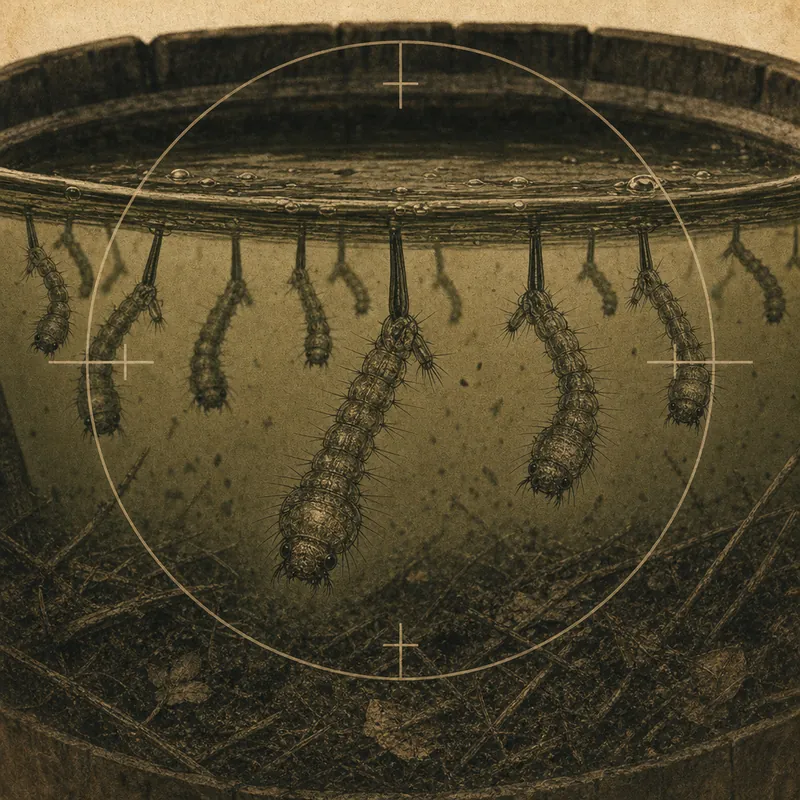
The carrier doesn't breed in clean streams or a healthy pond full of fish. She hunts for still, stagnant, funky water sitting in containers — a forgotten bucket, an old tire, a clogged gutter, a low spot that never drains.
Which means the enemy's staging areas aren't out in some swamp. They're on our own land.
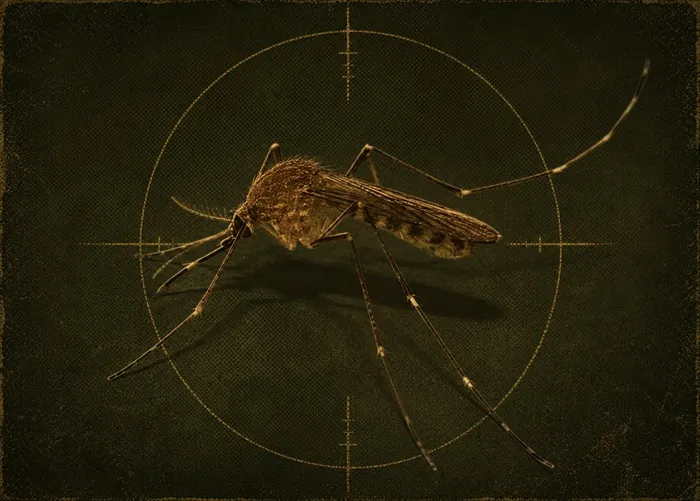
Culex tarsalis
A medium brown mosquito, active mostly at dusk and after dark. South Dakota sees some of the highest West Nile rates in the country — and this is the mosquito doing most of the work.
- White band around the middle of the proboscis
- White bands on the legs — the "tarsalis" tell
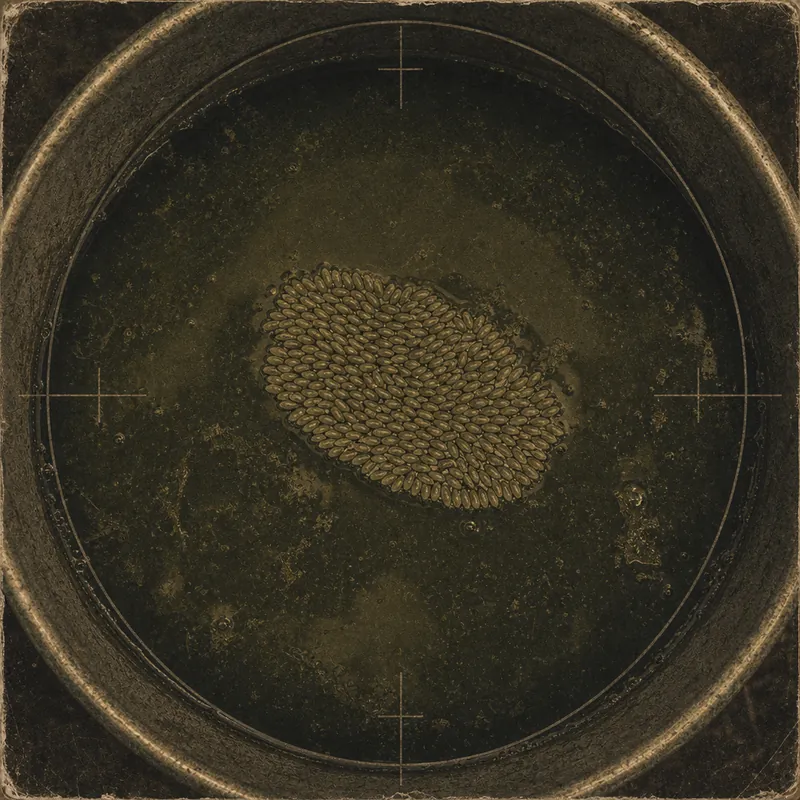
- Lays floating egg-rafts on the surface of still, foul water
- WEAKNESS: she'll raft up in your trap as readily as a roadside puddle
When She's Active
Translation: the fight runs from spring thaw to the first hard frost, and the earlier you're set up the more of the season your traps cover. But there is no point in the season where it's too late to start — every trap you put out stops the next batch from hatching, and the mosquitoes biting in September hatched in August. Best day to start was spring. Second best is today.
The Virus, Plain Terms
What it is & why it matters here
West Nile is the most common mosquito-borne disease in the Lower 48. You get it from the bite of an infected mosquito — you can't catch it from another person.
Most people who get infected (about 4 in 5) never feel a thing. Around 1 in 5 get flu-like illness — fever, headache, body aches. But roughly 1 in 150 develop serious illness that attacks the brain and spinal cord, which can mean hospitalization, lasting damage, or death. There is no vaccine and no cure — only supportive care. Prevention is the whole game.
And South Dakota is a hot spot. The state has among the highest rates of the severe, brain-and-spine form in the country, with more than 2,800 human cases and 50-plus deaths since 2002. The carrier is the same Culex tarsalis from the ID card above — and this isn't theoretical: human cases have shown up right here in Spink County.
The part that matters for us: the CDC and the SD Department of Health both name the same two defenses — get rid of standing water, and support community mosquito control. That's not our opinion. That's this operation.
Recon Your Land
FIND THE WATER FIRST
Walk the place after a rain. Mosquitoes need only a bottle-cap of standing water for a week. Check:
- Clogged gutters & downspouts
- Old tires
- Buckets, cans, jars
- Tarps & their folds
- Flowerpot saucers
- Water/feed troughs
- Wheelbarrows & equipment
- Tire ruts & low spots
- Kids' toys & pools
- Birdbaths & pet dishes
- Boats, tarp-covered gear
- Plugged culverts
Once you know where the water is, head to Build Plans to decide whether to drain it or trap it.